

Grim's Top 10 (History/Politics/Lifestyle)

  • Welcome to "The New" Wrestling Smarks Forum!

    I see that you are not currently registered on our forum. It only takes a second, and you can even login with your Facebook! If you would like to register now, pease click here: Register

    Once registered please introduce yourself in our introduction thread which can be found here: Introduction Board


Barry Poppins

Social Progressive
Joined
Mar 7, 2019
Messages
101,951
Reaction score
34,673
Points
138
Age
29
Title kind of says it all. This is just gonna be my sort of general top 10s for anything that's on my mind. Whether it be history, or politics, or lifestyles. Some of these might be in a specific order, others might not be. Really depends how I'm feeling. So anyways, enjoy some of my weird thoughts and if you agree, good, and if you don't, go fuck yourself and have a nice day!
"The List"

Top 10 U.S. Presidents (11/23/25)
Top 10 Worst U.S. Presidents (11/24/25)
 
Last edited:
  • Like
Reactions: Tommy MBE

Barry Poppins

Social Progressive
Joined
Mar 7, 2019
Messages
101,951
Reaction score
34,673
Points
138
Age
29
The Top 10 U.S. Presidents
(In No Particular Order)


10.
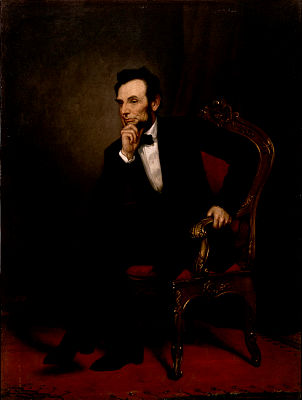
Abraham Lincoln
(1861-1865)


5.tif.jif3ptn5MUlH6c1hIAcA.esA_orafwS.jpg


Starting off on our countdown is perhaps the most consequential President in all of U.S. History. Lincoln came into office in the Spring of 1861, after several states had attempted an illegal secession from the Union. His leadership and force of personality led the country through the American Civil War, and through the passing of the 13th Amendment, which effectively ended chattel slavery. Much of his major legislation involves:

- The 13th Amendment
- The National Banking Act (1863)
- Admission of Nevada (1864)
- Freedman's Bureau (1865)


Though he only served a single term before being assassinated shortly after his Second Inauguration, he is rightfully seen as a second savior of the Union after the inestimable George Washington. The Lincoln Memorial carries his famous speeches at Gettysburg and his second inauguration on the sides of his statue. There is a room in the White House dedicated to his memory.

9.

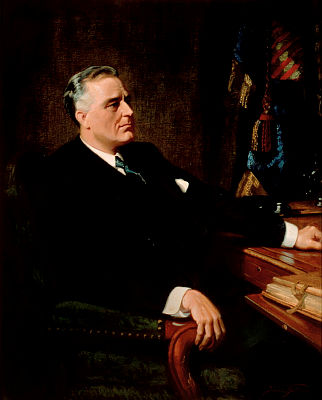
Franklin Delano Roosevelt
(1933-1945)


13.tif.jifpgdf5MUVJ6c1hIAcA.v9OgJyMWVb.jpg


Franklin Delano Roosevelt carries the longest run as a President of the United States, serving from 1933 until his death in 1945. It was because of his tenure that Congress passed a constitutional amendment limiting presidencies to two terms. Roosevelt came into office during the height of the Great Depression, when lax policy and deregulation of speculative trading led to a market crash in 1929 and subsequent bank and business failures within the next few years. Roosevelt created the New Deal in response to the Depression, which was a wide-range of social programs aimed at creating sustainable and efficient welfare for the most heavily affected civilians of the United States.

Additionally, Roosevelt maintained a friendly relationship with foreign figures like Winston Churchill, Charles De Gaulle, and Josef Stalin. When the Japanese Empire attacked the US on December 7, 1941, Roosevelt convinced congress to officially declare war; this officially entered the United States into World War 2. Roosevelt died of a sudden brain aneurysm on April 12, 1945, mere weeks before Nazi Germany surrendered. If there is perhaps one great failing for FDR, it would be his treatment and internment of Japanese-Americans during the war, in which they were sent to camps, not too dissimilar to Germany's concentration camps.

FDR's legislative track record includes:

- Emergency Banking Act, and Federal Deposit Insurance Company (1933)
- Removal of the Gold Standard (1933)
- The 21st Amendment (1933)
- Creation of the Civilian Conservation Corps. (1933)
-National Industry Recovery Act (1933)
- Federal Credit Union Act (1934)
- Securities and Exchange Commission (1934)
- Creation of the National Archives and Records Administration (1934)
- Communications Act (1934)
- Gold Reserve Act (1934)
- Fish & Wildlife Conservation Acts (1934)
- Creation of the National Labor Relations Board (1935)
- Social Security Act (1935)
- United States Housing Act (1937)
- Lend-Lease Act (1941)

It was through Franklin Delano Roosevelt's Presidency that the United States leapt out from isolationism and onto the world stage as a bona fide super power, through his "Lend & Lease" policies during a majority of World War 2. Roosevelt additionally had a hands-on role in prosecuting the Second World War. He is perhaps most remembered as America's most popular president of all-time, and the most "liberal" President in U.S. history.


8.

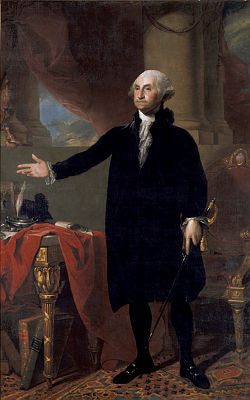
George Washington
(1789-1797)


21.tif.jieD69X5MTUZG99hIAcA.5kCXuu_IgB.jpg


George Washington never wanted power. It was thrust upon in him in 1789, when the collective of the people of the newly formed United States of America deemed him the only man who could run the country. Thus is the story of our very first President of the United States. Washington set forth the precedent of the office, enacting many of the formal and informal duties that a President partakes, which still survive today. Washington served faithfully and dutifully from 1789 until his voluntary retirement in 1797, in which he chose not to seek a third term. His major legislative achievements are as follows:

- Naturalization Act (1790)
- Ratification of the United States Constitution (1790)
- United States Copyright Act (1790)
- Creation of the National Bank of the United States (1790)
- Admission of Vermont (1791)
- Ratification of the Bill of Rights (1791)
- Admission of Kentucky (1792)
- Coinage Act (1792)
- Militia Acts (1792)
- Neutrality Proclamation (1793)
- Slave Trade Act (1794)
- Admission of Tennessee (1796)

Washington's tenure was not without issue, as with the early laws, tariffs, and taxes led to public outcry and several attempts at rebellion, such as the Whiskey Rebellion of 1791. Washington additionally did not enjoy the office of the Presidency but continued to feel duty bound to perform to the best of his abilities. Perhaps the worst thing to be said about Washington as well would be that he was a slaveholder, and did not particularly sense any issue in the bondage of Africans. Nevertheless, his influence is still felt to this day, and he is rightfully considered among the best Presidents of all time.


7.

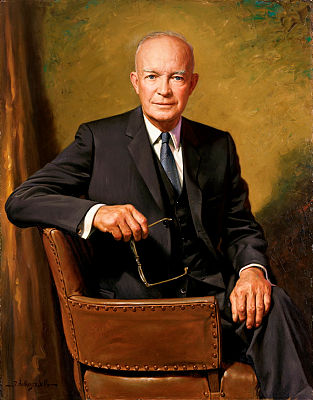
Dwight D. Eisenhower
(1953-1961)


11.tif.jiefhtf5MRU_6c1hIAcA.sHW8W-H9WN.jpg


Dwight Eisenhower didn't have ambitions to become President, but was swayed into running by the Republican party based off his personal popularity. Eisenhower served as the Supreme Commander of the Allied Expeditionary Force during World War 2, and was the mastermind behind the infamous D-Day landings in Normandy, and for the North African campaigns of the War. Eisenhower defeated Harry Truman in the 1952 election, and served from 1953 until 1961. Eisenhower exemplified the American attitudes of the 1950s, with his anti-Communist attitude, and laissez-faire economic policy. His major legislation includes:

- Creation of the Department of Health, Education, and Welfare (1953) [Later Split into DoE and DHHS]
- AFL-CIO Merger (1955)
- Federal Highway Act (1956)
- Social Security Act (1956)
- Civil Rights Act (1957)
- Admission of Alaska (1958)
- Admission of Hawaii (1959)
- Civil Rights Act (1960)

Much of Eisenhower's tenure was concerned with improving infrastructure and maintaining the balance between worker's unions and business owners. Eisenhower additionally is responsible for appointing Earl Warren and William Brennan to the Supreme Court, which led to the Warren Court of 1954 to 1969, the most liberal and consequential court in U.S. history. Several major black marks on Eisenhower's tenure though would be the tacit support of Joseph McCarthy's "Red Scare", and of course Eisenhower's deliberate influence on the "Lavender Scare", which led to the persecution of potential homosexuals both in private and federal workplaces. His greatest action of all, though, was the Federal Highway Act, which created a majority of the highways around the U.S. today.


6.

Lyndon B. Johnson
(1963-1969)

1cadaa9cc1c64a36900af4aa14755990.jpg


Johnson perhaps maintains himself in the most controversial member of my top 10. For one, he increased hostilities in Vietnam which led to tens of thousands of unnecessary U.S. fatalities. Additionally, Johnson was an avowed personal racist, and potential sexual harasser of his cabinet members. Nevertheless, despite the failings of his personal life and his foreign policy, Johnson's domestic institutions stand as perhaps among the greatest in all of U.S. history. Johnson, in spite of his racism, stood steadfast for the Civil Rights Act of 1964, and created what contemporaries would call "the Great Society". These policies would could reasonably be considered a third New Deal. These major legislative acts include:

- 24th Amendment (1964)
- Civil Rights Act (1964)
- Economic Opportunity Act (1964)
- Elementary and Secondary Education Act (1965)
- Creation of Medicare and Medicaid (1965)
- Voting Rights Act (1965)
- 25th Amendment (1967)

It should be noted, however, that Johnson had an effective plan to end the war in Vietnam during the 1968 election, which he had opted out of in favor of letting the people decide on a new President. Johnson was betrayed and sabotaged by the Nixon campaign, and a diplomat named Henry Kissinger in convincing the South Vietnamese President Nguyen Van Thieu to back out of the Paris Peace Accords to get a "better deal" from the Nixon Administration. The end of his Presidency saw him disgraced and left hanging in the wind, an inglorious end to a turgid and climactic tenure.


5.

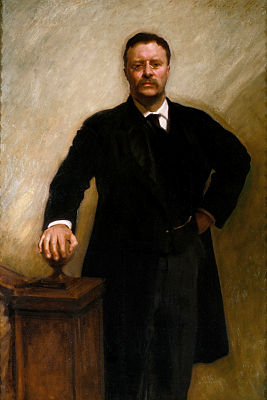
Theodore Roosevelt
(1901-1909)


56.tif.jie3_9b5MYEzG99hIAcA.axsq-21Qb6.jpg


Our second President to arrive into office off the back of an assassination, Theodore Roosevelt served as President after the assassination of William McKinley in 1901 until 1909. Roosevelt was thrown into the Vice Presidency by the Republican party in order to muzzle his radical ideas and aggressive antitrust attitude. This would fail spectacularly, which would serve to split the Republican party nearly a decade later. Roosevelt was an avid outdoorsman, and sought to protect state and national parks; Theodore additionally hated monopolies and did everything in his power to destroy and break down unwarrantable and corrupt business practices. His most infamous enemy would be John D. Rockefeller of Standard Oil.

Roosevelt's major legislative actions include:

- Elkins Anti-Rebate Act (1903)
- Sherman Anti-Trust Act (1904)
- Creation of the National Forest Service (1905)
- Hepburn Act (1906)
- Meat Inspection Act (1906)
- Pure Food and Drug Act (1906)
- Admission of Oklahoma (1907)

We should not forget that for as great and turbulent as Theodore Roosevelt is, he is now without faults. For one, Roosevelt avidly passed anti-immigration laws targeted primarily at Chinese and Japanese laborers throughout his tenure. Perhaps the second worst act that Roosevelt had committed would be his handling of the Brownsville affair, in which he would dishonorably discharge 167 black soldiers in Texas after these soldiers were accused of killing a white bartender. These men were never received pardons until 1972, when only one member was left. Nevertheless, Roosevelt stood by the working class and helped to protect their rights against corrupt businesses and instilled harsh regulations, many of which are still followed to this day.


4.

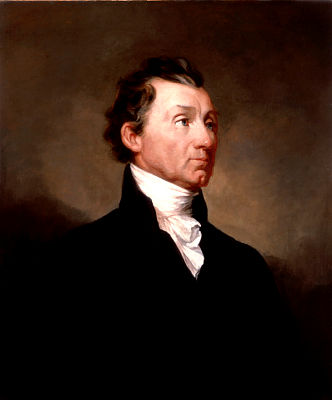
James Monroe
(1817-1825)


31.tif.jieNyNP5MRc76c1hIAcA.L22scOF2ib.jpg


When one thinks of a golden age for the United States, many tend to forget the zenith of the era of the Framers. This period is known as the "Era of Good Feelings". Monroe served as President from 1817 until 1925, and is the last President to be voted unanimously by the Electoral College. This era began as the end of the War of 1812 and the Louisiana Purchase had come to full fruition, leaving Monroe to maintain things as they were. His tenure saw many new states become implemented, though with the Missouri Compromise, it cause the debate over slavery to be kicked down the road (which would invariably lead to a cataclysmic civil war). Monroe's greatest legacy sits at the creation (in lieu of his Secretary of State John Quincy Adams and Great Britain's foreign secretary George Canning) of the Monroe Doctrine, which dictated that the United States would be a protector to any territories and free states in the Western Hemisphere, restraining European powers from invading in Central and South America. Monroe's major legislation includes:

- Admission of Mississippi (1817)
- Admission of Illinois (1818)
- Admission of Alabama (1818)
- The Missouri Compromise (1820)
- Admission of Maine (1820)
- Admission of Missouri (1821)

Monroe was an extremely popular President of his time, though hindsight has not treated him kindly for his handling of the Missouri crisis. Yet the admission of five new states during his Presidency shouldn't be looked past. It was a complicated period in American history, where Southern Rights Nationalism and Federal Unionism began to form in their infant stages. Time would tell which would win, and Monroe was unfortunately powerless to stop any of it.


3.

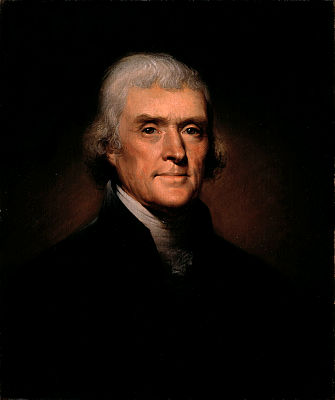
Thomas Jefferson
(1801-1809)


55.tif.jielvdT5MWtB6c1hIAcA.yLtWzmBzuD.jpg


Jefferson served as the Third President of the United States from 1801 until 1809, and his greatest action would be to double the size of the United States with the Louisiana Purchase; this act would involve the purchasing of 828 thousand square miles of land from Napoleon Bonaparte, for pennies on the dollar. Jefferson was a pro-French advocate, and thus maintained a friendly relationship with Bonaparte for the majority of his tenure. Much of his major legislation includes:

- Repealing of Naturalization Act (1802)
- Admission of Ohio (1803)
- Louisiana Purchase (1803)
- Twelfth Amendment (1803)
- Act Prohibiting Importation of Slaves (1807)
- Embargo Act (1807)

Jefferson led the way for multiple states to be admitted, particularly in Monroe's tenure, yet there are several black marks on Jefferson. Jefferson's protectionist policies led to the US suffering from a lack of trade between France and England (who were at war with one another), and the Louisiana Purchase was debatably unconstitutional at the time, as Jefferson did not consult Congress until after the deal was agreed to. Finally, it's the thing everyone knows Jefferson for: his slave ownership and Sally Hemings and his children with Sally; what Jefferson did back then would today be considered rape and trafficking, and the fact that he had kids with his slaves and kept them in bondage as well is reprehensible, even by the standard of the time (though for different reasons). All this being said, Jefferson's influence is undeniable, and as the chief author of the Declaration of Independence of 1776, his prose brought forth the ideals of the American Dream.


2.

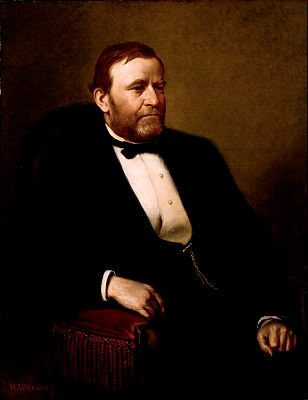
Ulysses S. Grant
(1869-1877)


57.tif.jif8qdr5MSE_6c1hIAcA.OUYdVOgk9p.jpg


From Thomas Jefferson owning slaves, we have a man who fought to end slavery and additionally protect the rights of freed slaves. Ulysses S. Grant (born Hiram Ulysses Grant) had a rough life, but he trudged forward through dirt, mud, poverty, and his own moral dilemmas to become one of the great Presidents in U.S. History. Was Grant perfect? No; as a matter of fact, Grant's greatest flaw was his naivete that his cabinet and advisors had the nation's best interests in a time when Reconstruction brought widespread corruption both in the post-Civil War South and in Washington D.C. Yet Grant persisted in spite of these scandals, and ushered in the most successful and expansive pieces of legislation attempting to guarantee rights for minorities and recent freedmen. These legislative achievements involve:

- Creation of the United States Weather Bureau (1870) [Now National Weather Service]
- Fifteenth Amendment (1870)
- Creation of the Department of Justice (1870)
- Ku Klux Klan Act (1871)
- Civil Rights Act (1875)
- Admission of Colorado (1876)

Grant's tenure is also not without other failings. One aspect that is usually never spoken about is the controversial Indian Appropriation Act, which ended the native tribal system and enforced U.S. legal "guardianship" of the Natives. This invariably led to the destructive Black Hills War and the disastrous Battle of Little Bighorn. The scandals would tank Grant's popularity, and his unwillingness to step down from his candidacy led to the Election Crisis of 1876. The immediate effects of this crisis would officially end Reconstruction in exchange for Republican Rutherford B. Hayes' victory via the House of Representatives. An ignominious end to an otherwise excellent Presidency.


1.
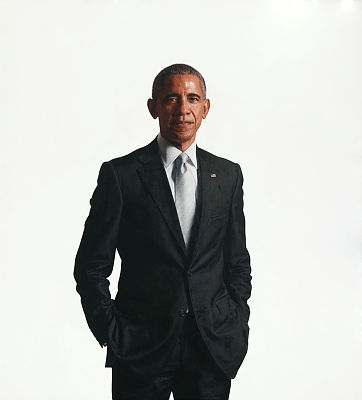
Barack Obama
(2009-2017)


1135359.tif.jieI3t75MdvXSZNjIAcA.w3ipfMApeB.jpg


The last member of our countdown is the most popular President of the 21st Century (so far), and the first African-American to hold the highest office in the nation. Barack Obama came from out of nowhere to snatch the nomination in the Summer of 2008, but his messaging and power of personality shined through and excited a generation of voters into believing that "Yes we can" do anything. Did Obama live up to all of his expectations? No, I would not say that any modern president is capable of doing that. Obama suffered from, in my opinion, the same issues as Lyndon B. Johnson did: Excellent domestic policy, partnered with abysmal foreign policy. Obama helped escalate tensions in the middle east, from his unethical and unrelenting drone strikes, to maintaining the status quo in Afghanistan. He was a controversial President of his time, and even today has a mixed legacy particularly among left-leaning thinkers. His major policies include:


- American Recovery and Reinvestment Act (2009)
- Hate Crimes Prevention Act (2009)
- Affordable Care Act (2010)
- Dodd-Frank Wall Street Reform and Consumer Protection Act (2010)
- Repeal of "Don't Ask, Don't Tell" Doctrine (2010)
- American Taxpayer Relief Act (2013)
- Clay Hunt Suicide Prevention for American Veterans Act (2015)

Obama's ultimate legacy will sit with the Affordable Care Act, a massive piece of legislation which aimed to protect citizens from unfair insurance practices. Opponents of the bill even today use the derisive and frivolous sobriquet "Obamacare". It will remain seen if the ACA will survive this current Presidency, or if it is doomed to die and let more people suffer for the indignity of poverty.
 
  • Like
Reactions: Tommy MBE and Chris

Chris

Dreams are Endless
Joined
Dec 23, 2011
Messages
405,255
Reaction score
170,158
Points
128
Age
29
Location
Texas
Favorite Wrestler
tLCb5kv
Favorite Wrestler
OEndG4L
Favorite Wrestler
ArsUxsj
Favorite Wrestler
mrperfect2
Favorite Wrestler
BryanDanielson1
Favorite Wrestler
eelOIL6
Favorite Sports Team
sfa
Favorite Sports Team
dallascowboys
Favorite Sports Team
sanantoniospurs
Favorite Sports Team
texasrangers
I like all them, I think might try and force in Truman but idk who I'd kick out for him, maybe Monroe
 

Chris

Dreams are Endless
Joined
Dec 23, 2011
Messages
405,255
Reaction score
170,158
Points
128
Age
29
Location
Texas
Favorite Wrestler
tLCb5kv
Favorite Wrestler
OEndG4L
Favorite Wrestler
ArsUxsj
Favorite Wrestler
mrperfect2
Favorite Wrestler
BryanDanielson1
Favorite Wrestler
eelOIL6
Favorite Sports Team
sfa
Favorite Sports Team
dallascowboys
Favorite Sports Team
sanantoniospurs
Favorite Sports Team
texasrangers
Do top 10 pets next
 
  • Like
Reactions: Tommy MBE

Barry Poppins

Social Progressive
Joined
Mar 7, 2019
Messages
101,951
Reaction score
34,673
Points
138
Age
29
I like all them, I think might try and force in Truman but idk who I'd kick out for him, maybe Monroe
I thought about Truman but I ultimately kept him out because of the Truman doctrine which is the primary incitement for the Korean War and other wars and insurgent campaigns brought on and funded by the U.S. plus the whole dropping a Nuke on a foreign country is still pretty controversial.
 
  • Like
Reactions: Tommy MBE and Chris

Barry Poppins

Social Progressive
Joined
Mar 7, 2019
Messages
101,951
Reaction score
34,673
Points
138
Age
29
Also I originally had Coolidge in the top 10 as well but after further reflection I took him out primarily because Harding, Coolidge, and Hoover did nothing to prevent the market crashes and the Great Depression. Their laissez-faire attitudes created a bubble that was going to inevitably burst.
 
  • Like
Reactions: Tommy MBE and Chris

Barry Poppins

Social Progressive
Joined
Mar 7, 2019
Messages
101,951
Reaction score
34,673
Points
138
Age
29
The Top 10 Worst U.S. Presidents

10.
Andrew Jackson
(1829-1837)


6d20df4149dc462e95f23da5cd5b71fa.jpg


Andrew Jackson starts off our list as he came to power in 1829 and began a wide range of authoritarian dictums which would be used by later Presidents like Lincoln, Roosevelt (for better) and Donald Trump (for worse). Jackson was a very popular President of his day, based on his military successes during the War of 1812 and against the Red Stick Muscogee natives. Jackson's Presidency saw the enforced removal of Native Americans in spite of Supreme Court rulings deeming such acts as unconstitutional. Jackson additionally advocated for "States Rights Nationalism", which changed the dynamic of politics in the United States from class divisions into race and sectional divisions. He censored abolitionist pamphlets, and blamed Northerners for the Nullification crisis. Jackson openly called for American citizenship to be limited to White Anglo-Saxon Protestant Males, where Natives, Blacks, and Women are denigrated to subjection and servitude.

Jackson's Infamous Legislature Includes:

- Indian Removal Act (1830)
- Nullification Proclamation (1832)
- Veto of the Second Bank of the United States (1832)
- Force Bill (1833)
If there is anything to praise Jackson for, it would be his clearing of the National Debt, the only U.S. President to do so. His force of personality led to a split in the Democratic-Republican Party, one which would die out, and the other becoming the modern day Democratic Party.


9.
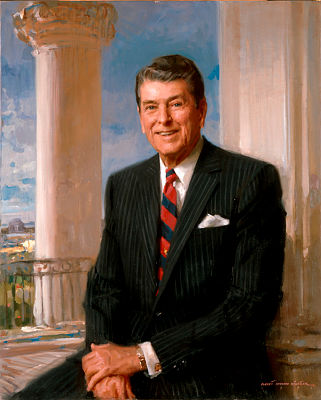
Ronald Reagan
(1981-1989)
48.tif.jifM1brxMUkffc9hIAcA.kH7g77sVAf.jpg


You're reading that right. I've got Ronald Reagan as among the top 10 worst U.S. Presidents. I'm sure you're wondering why; he was popular, charismatic, and an excellent orator and conveyed the attitudes perfectly of the 1980s. This is the image that people continually paint Reagan in, yet his undue influence is still felt in today's economy. Reagan has several scandals and black marks that, if taken under a larger microscope, should make him a more vilified figure in American history. After all, he is the demagogue for the modern Republican Party et al.

Starting from the beginning, Reagan's campaign conspired with the Iranian government to undermine President Jimmy Carter's negotiations for the release of hostages during the Iran Hostage crisis; Reagan was aided by, who else, but Henry Kissinger. Then in August of 1981, PATCO underwent a work strike for better pay and working conditions for air traffic controllers; Reagan declared the strike illegal and fired over 11,000 federal workers, effectively union-busting and banning all who were involved. This began a concerted effort by the Reagan and Bush administrations to (successfully) destroy public confidence and opinion in worker's unions. Then there was Reagan's deplorable handling of the AIDS epidemic of the 1980s, effectively leaving those infected by the disease to hang out to dry and suffer for the "crime" of being homosexual or having blood transfusions.

Reagan additionally buddied up to the Evangelical Christian Nationalist movements of the period, who had become dissatisfied with the Democratic Party between the 1930s to the 1970s. In doing so, he aided and abetted in the Satanic Panic of the 1980s, and anti-LGBTQ movements throughout the country. Reagan's administration additionally was involved in several scandals, up to and including: The Iran-Contra Affair, the HUD rigging in favor of Republican lobbyists, dismantling the EPA's effectiveness, and finally Reagan utilizing the FDIC to bail out several fraudulent banks during the S&L Crisis.


Reagan's Infamous Legislation:

- Economy Recovery Tax Act (1981)
- Gasoline Tax (1983)
- Comprehensive Crime Control Act (1984)

Reagan additionally expanded the War on Drugs and created harsher penalties for drug-related offenses, including marijuana. Reagan de-regulated businesses and lowered corporate taxes based on the economic theory of "trickle-down economics", which disproportionately aided the upper class in comparison to the lower class. This would become a major tactic of the Republican party going forward, where even Reagan's successor George H.W. Bush lied to the American people about raising taxes on the lower class. It's not hard to see why I highly dislike Reagan and think he was a net negative to the country, even 40 years later.


8.
Franklin Pierce
(1853-1857)


2adb0a5933be4339bc00e01d0f8bc556.jpg


Though Pierce served a mere single term, his reign was marked by increased tension as a result of major legislative and executive failures of his office. Pierce suffered a horrible accident weeks before he became president where his son would be decapitated by a steam train, and from it, Pierce became an extreme alcoholic. This did not aid his public image, yet it was the sum of his actions which led to him being tossed out by the Democratic party in favor of James Buchanan in the next election.

Pierce's Legislative Legacy:

- The Gadsden Purchase (1853)

- Kansas-Nebraska Act (1854)

7.
John Adams
(1797-1801)
7fa8f755415a46b6a522b02b251c1cab.jpg


John Adams' legacy should be more than his Presidency. He was a fiery patriot and ardent lawyer who utilized his legal expertise to bring independence to the United States during the American Revolution. He personally nominated George Washington to lead the Continental Army, he was a member of the committee to write the Declaration of Independence, and as Vice President was a key advisor to Washington. His Presidency alas is marked with scandal and terrible acts. The XYZ Affair in 1797 led to collapsed relations with Revolutionary France and fractured his relationship with Thomas Jefferson. Yet in spite of Adams' failures, there were several things he did right: He established the Library of Congress, passed the Federal Bankruptcy Act of 1800, and kept America from fully entering into a war with France. Sadly, it would not be enough for him as he would lose re-election to his longtime friend and now enemy Thomas Jefferson in 1800.

Adams' Legislative Legacy:

- The 11th Amendment (1798)
- Alien Act (1798)
- Alien Enemies Act (1798)
- Sedition Act (1798)


6.
Rutherford B. Hayes
(1877-1881)

3b79a2c35b544ec5917c66c3ba1d6f6f.jpg


Rutherford B. Hayes came to the office in the wake of the "corrupt bargain" of 1876. The Democrats agreed to allow Hayes to become President if he ended Reconstruction, which is exactly what happened. The end of Reconstruction created the environment for Jim Crow laws to be implemented, and for African Americans to suffer under the doctrine of "Separate, But Equal". Hayes served a single term before being ousted from office by Republicans who preferred James Garfield.

Hayes' Legislative Agenda:

- Chinese Immigration Limitations (1878)


Most of his presidency is spent vetoing a majority of bills sent his way, including some that would have nullified black votes via removing protections. Yet this would not save Hayes from losing the 1880 election.

5.
Woodrow Wilson
(1913-1921)

6ba009ed14be4617b7530ab45755f1fe.jpg


Woodrow Wilson came into office off the back of a splintered Republican vote in 1913, and his tenure would see the US enter World War 1, create the League of Nations, but frustratingly never join this coalition. On top of this, Wilson was among the first Presidents to eschew the worldview that America must enforce democracies all over the world. This is despite the fact that Wilson was anti-democratic to his own peoples, pre-war and during the war. Wilson was an avid Confederate apologist and racist, seeing black people as inherently inferior.

Wilson and his Legislation:

- 17th Amendment (1913)
- Underwood-Simmons Tariff Act (1913)
- Selective Service Act (1917)
- Espionage Act (1917)
- Eighteenth Amendment (1917)
- Sedition Act (1918)
- 19th Amendment (1919)

If there is anything positive to say about Wilson, it would be that he was instrumental in passing the 19th Amendment, aided farmers in the Midwest, and established the Federal Reserve. That is where my praises of him will end.


4.
Richard Nixon
(1969-1974)


19f51f52bc7a4451a197257f84a7cb7c.jpg


Richard Nixon was a snake who slithered his way into the Presidency through subterfuge and lies. His campaign team, and Henry Kissinger, committed treason and scuttled the Paris Peace Accords to tank Democratic popularity during the election of 1968. Nixon started the War on Drugs primarily as an effort to target minorities and left-leaning dissidents. Most of all, Nixon tacitly approved the wiretapping of political dissidents and locales throughout the United States, from Camp David to the White House itself. All throughout his tenure after the Watergate Scandal broke, Nixon attempted to cover it up, scuttle investigations, and distance his involvement as much as possible. Ultimately, Nixon would have been impeached, had he not resigned in 1974 and instructed his successor Gerald Ford to pardon him for any potential crimes.

Yet if there's anything to say about Nixon, it's that he passed several key laws that aided Americans in the long-term: the Environmental Protection Agency, the Postal Reorganization Act, and the Occupational Health and Safety Act, and expanded protections and welfare to the disabled. This does not excuse his corruption and illegal activities, however.


3.
Andrew Johnson
(1865-1869)

25882c33f6e24e968a8725d0e763e278.jpg


Andrew Johnson, a slimy stinking jackass, came into office after Abraham Lincoln's assassination in 1865. Johnson took the office and immediately scuttled Reconstruction into a worst case scenario. He actively aided Ex-Confederates and left former slaves out to dry. He was impeached and nearly convicted if not for a split decision in the Senate, and he was overall hated by everyone. One wonders what Reconstruction could have been like had Johnson never been involved and botched it so horribly. All of us hate Andrew Johnson.

2.
James Buchanan
(1857-1861)


c18234ca41ae46209d78ce5ffad13939.jpg


James Buchanan came into office after the disastrous term of Franklin Pierce, and he did not do much better. In fact, Buchanan stood back and let his own Vice President commit treasonous acts to aid the Confederacy after the election of Abraham Lincoln in 1860. He did nothing to stop the secession crisis of 1860-61. His lack of action and stronger authority against the slave-holding states led to the American Civil War, which his successor Abraham Lincoln would spend his entire tenure dealing with. Buchanan sucks specifically for not doing a damn thing.

1.
Donald Trump
(2017-2021 ; 2025- )


ddbf304105384a3bad95ef58fe79594c.jpg


It's the old, bloated, shit-faced orange dweeb himself. I mean, what can be really said about him that hasn't already been said? We're suffering now under the weight of his second term, somehow merely 10 months in and even more disastrous than his first. Global tariffs, a housing crisis, end-stage capitalism, and many more issues plaguing the United States, and the country has never been more divided since the American Civil War. We're talking about a President who attempted to disrupt the peaceful transition of power by sending a literal mob to the Capitol to stop the transition process. He openly wants his opponents arrested, deported, and murdered. How can you not make a case that he is among the worst Presidents of all time. I mean, he was impeached twice, and rumors say of a third impeachment incoming. He is an anti-vaxxer, a fascist, and a rakish opportunist above all else.
 
  • Like
Reactions: Tommy MBE and Chris

Chris

Dreams are Endless
Joined
Dec 23, 2011
Messages
405,255
Reaction score
170,158
Points
128
Age
29
Location
Texas
Favorite Wrestler
tLCb5kv
Favorite Wrestler
OEndG4L
Favorite Wrestler
ArsUxsj
Favorite Wrestler
mrperfect2
Favorite Wrestler
BryanDanielson1
Favorite Wrestler
eelOIL6
Favorite Sports Team
sfa
Favorite Sports Team
dallascowboys
Favorite Sports Team
sanantoniospurs
Favorite Sports Team
texasrangers
I'd put Reagan higher at this point
 

Chris

Dreams are Endless
Joined
Dec 23, 2011
Messages
405,255
Reaction score
170,158
Points
128
Age
29
Location
Texas
Favorite Wrestler
tLCb5kv
Favorite Wrestler
OEndG4L
Favorite Wrestler
ArsUxsj
Favorite Wrestler
mrperfect2
Favorite Wrestler
BryanDanielson1
Favorite Wrestler
eelOIL6
Favorite Sports Team
sfa
Favorite Sports Team
dallascowboys
Favorite Sports Team
sanantoniospurs
Favorite Sports Team
texasrangers
I was debating even including him but yeah, with 40 years' hindsight, Reagan was objectively a bad President for so many reasons.

It's funny I've grown to appreciate him a lot more from a foreign policy perspective (Iran contra affair the exception, inexcusable), but for domestic policy I think he was one of the worst of all time. We still feel so many affects today it's ridiculous
 

Tommy MBE

WRESTLING IS COOL
Joined
Jul 3, 2024
Messages
9,875
Reaction score
1,977
Points
133
Age
39
Location
England.
Favorite Wrestler
stonecold
Favorite Wrestler
stonecold
Favorite Wrestler
8zeSJYf
Favorite Wrestler
9yQJpez
Favorite Wrestler
codyrhodes3
Favorite Wrestler
Se3BZPQ
Favorite Sports Team
eZIPN8K
Favorite Sports Team
FXYi6FH
Who do most Americans think is the best President? I always thought it was FDR with the new deal . Clinton replicated it in a modern setting and so did Tony Blair and Gordon Brown in 1997-2010.

Great start Barry as I'm a history buff and love to learn stuff i dont know much about.
Worst before Trump , nixon could of been higher maybe second . But like you said it's not in order

Should do Consoles next .
 

Tommy MBE

WRESTLING IS COOL
Joined
Jul 3, 2024
Messages
9,875
Reaction score
1,977
Points
133
Age
39
Location
England.
Favorite Wrestler
stonecold
Favorite Wrestler
stonecold
Favorite Wrestler
8zeSJYf
Favorite Wrestler
9yQJpez
Favorite Wrestler
codyrhodes3
Favorite Wrestler
Se3BZPQ
Favorite Sports Team
eZIPN8K
Favorite Sports Team
FXYi6FH